What are the biggest digital marketing trends to look out for in 2026?
How much more will AI involve and how much more will AI guide every company’s digital marketing strategy?
As we always do this time of year, we look forward to what we can expect in the New Year that will help our agency evolve to remain ahead of the marketing curve to keep our clients growing.
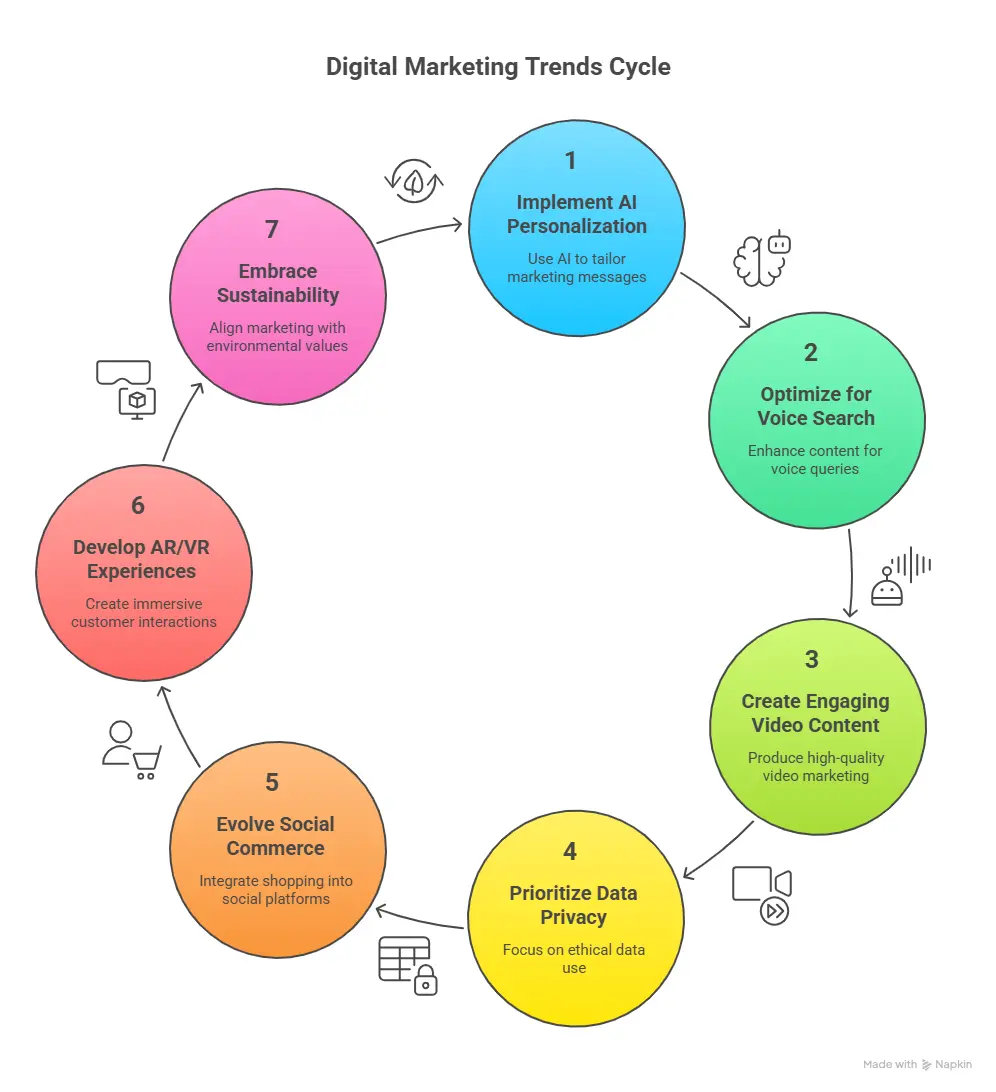
Whether you’re a small business owner or a marketing executive at a large corporation, these seven trends will shape how you connect with customers, generate leads, and drive revenue in the coming year.
At Avita Group, we’ve been tracking these developments closely through our work with clients across diverse industries from family law attorneys to managed service providers. And after having spent over 30 years in the digital marketing space, we can honestly say that the last year has been the most propulsive that we have ever seen.
Which means this next year stands a fair chance of doubling down on the break-neck evolution of marketing as we know it.
So we wanted to draw on real-world implementation experience, our own personal data analysis, and exhaustive hours of industry research to give you actionable insights you can apply to your 2026 marketing strategy in the form of:
- AI-Powered Hyper-Personalization
- Voice Search Optimization
- Video Content
- First-Party Data and Privacy-First Marketing
- Social Commerce Evolution
- Interactive and Immersive Experiences Through AR/VR
- Sustainability and Purpose-Driven Marketing
1. AI-Powered Hyper-Personalization Takes Center Stage
Artificial intelligence has moved beyond buzzword status into practical, revenue-generating applications. In 2026, successful marketers will leverage AI not just for automation, but for creating genuinely personalized customer experiences at scale.
The difference between basic personalization and AI-powered hyper-personalization is profound. While traditional personalization might address someone by their first name in an email, AI-powered systems analyze hundreds of data points—browsing behavior, purchase history, time of day, device type, and even sentiment analysis of customer service interactions—to deliver uniquely tailored experiences.
We’ve seen firsthand how artificial intelligence is changing digital marketing strategies for our clients. Companies using AI-driven personalization are seeing conversion rates increase by 20-30% compared to traditional segmentation approaches.
Tools like Salesforce Einstein and Adobe Sensei are making enterprise-level AI accessible to mid-market companies. These platforms can predict customer lifetime value, recommend optimal send times for email campaigns, and even generate personalized content variations automatically.
For businesses implementing AI optimization strategies, the key is starting with a clear identification of your Ideal Customer Profile (ICP) and then teaching the AI tools how best to attract more customers with that profile.
Then, once those customers are in your system – either as web visitors or previous buyers – using AI to customize the experience and buying suggestions on a more micro level for each individual will be key.
Practical Application for 2026:
- Implement AI-powered product recommendations on your e-commerce site
- Use predictive analytics to identify customers at risk of churning (aka leaving your business eco-system)
- Deploy AI chatbots ideas that can understand context and sentiment, not just keywords
- Create dynamic website content that adapts based on visitor behavior patterns

Optimizing your traffic for AI will take center stage in 2026.
2. Voice Search Optimization Becomes Non-Negotiable
With smart speakers in over 35% of U.S. households and voice assistants on nearly every smartphone, voice search is no longer a future trend—it’s a present reality that will dominate search behavior in 2026.
The way people search using voice differs fundamentally from typed queries. Voice searches are longer, more conversational, and often phrased as questions. Someone typing might search for “best Italian restaurant Seattle,” but using voice, they’d say, “What’s the best Italian restaurant near me that’s open right now?”
This shift requires a complete rethinking of your SEO strategy. Traditional keyword optimization focused on short, fragmented phrases won’t capture voice traffic. Instead, you need to optimize for natural language queries and featured snippets.
For local businesses especially, voice search optimization is critical. Nearly 60% of voice searches have local intent—people looking for nearby restaurants, service providers, or stores. If your business isn’t optimized for “near me” searches and doesn’t have a fully optimized Google Business Profile, you’re invisible to a massive segment of potential customers.
Tools like Answer the Public can help you identify the questions your target audience is asking, allowing you to create content that directly addresses these queries in a conversational format.
Practical Application for 2026:
- Create FAQ pages that address common questions in your industry using natural language
- Optimize for featured snippets by providing clear, concise answers to common questions
- Ensure your website loads quickly (voice search users expect immediate results)
- Claim and fully optimize your Google Business Profile and other online directories
- Use schema markup to help search engines understand your content context

Click here to try free tools that will help increase your search engine and AI optimization.
3. Video Content Dominates Every Platform
If you’re not investing in video content for 2026, you’re essentially invisible to a significant portion of your target audience. Video isn’t just popular—it’s becoming the default content format across platforms.
Consider this statistic: 88% of online shoppers say they were convinced to buy a product or service only after watching a brand’s video.
But here’s the crucial insight: video in 2026 isn’t about big-budget productions. Short-form, authentic content is outperforming polished commercials. Platforms like TikTok, Instagram Reels, and YouTube Shorts have democratized video marketing, making it accessible to businesses of all sizes.
The key is consistency and authenticity.
Users want to see the real people behind your brand, not just perfectly scripted marketing messages. Behind-the-scenes content, customer testimonials, product demonstrations, and educational how-to videos are generating exceptional engagement.
AI tools are also making video production easier than ever. Platforms like Synthesia and Pictory can create professional videos from text scripts using AI avatars and automated editing, significantly reducing production time and cost.
Practical Application for 2026:
- Create a content calendar that includes at least 2-3 video posts per week
- Repurpose blog content into short video formats
- Use live video for product launches, Q&A sessions, and behind-the-scenes tours
- Optimize video titles, descriptions, and tags for search (YouTube is the second-largest search engine)
- Add captions to all videos (85% of social media videos are watched without sound)
4. First-Party Data and Privacy-First Marketing
The death of third-party cookies isn’t just changing digital advertising—it’s fundamentally transforming how businesses build relationships with customers.
In 2026, your ability to collect, manage, and leverage first-party data will be your most valuable competitive advantage.
First-party data is information customers willingly share directly with your business: email addresses, purchase history, preferences, and behavioral data from your owned channels. Unlike third-party data purchased from brokers, first-party data is more accurate, privacy-compliant, and uniquely valuable because it represents real customer relationships.
The challenge is that collecting first-party data requires giving customers a compelling reason to share their information. This is where value exchanges become critical: exclusive content, personalized experiences, early access to products, or meaningful discounts in exchange for data.
Email marketing is experiencing a renaissance precisely because it’s built on first-party data. When managed properly with permission-based lists and genuine value delivery, email remains one of the highest-ROI marketing channels available.
Tools like Segment and Hightouch help businesses create unified customer data platforms, making it easier to collect, organize, and activate first-party data across marketing channels.
Practical Application for 2026:
- Create compelling lead magnets that provide genuine value in exchange for email addresses
- Implement a customer data platform to unify data from all touchpoints
- Build preference centers that let customers control what communications they receive
- Use progressive profiling to gradually collect more information over time
- Develop a loyalty program that rewards customers for sharing preferences and feedback
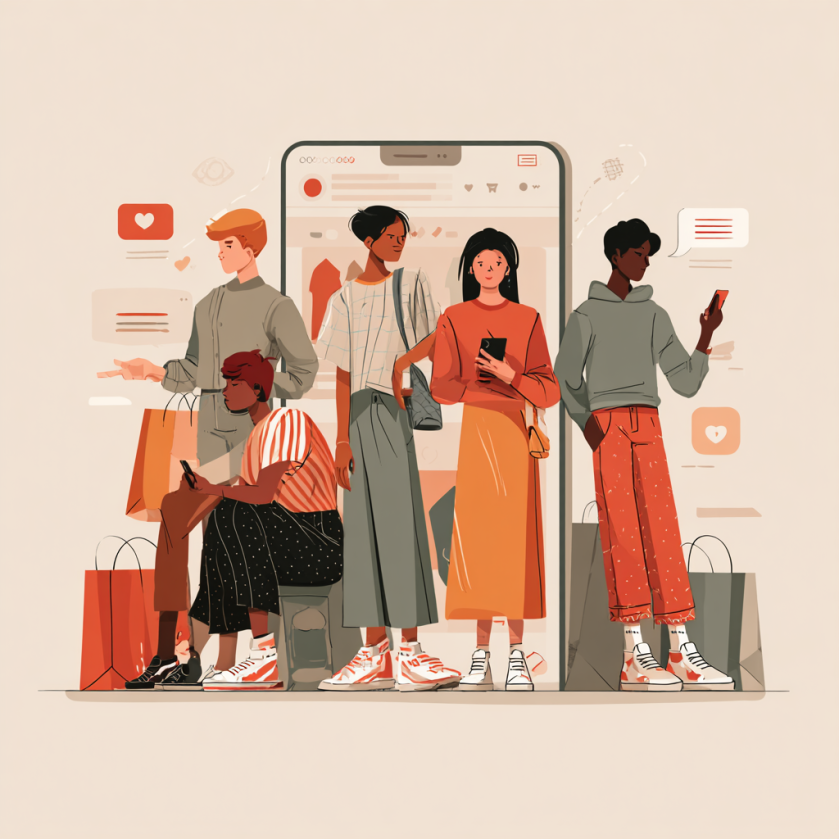
E-commerce directly on social media platforms will be the new way to buy in the new year.
5. Social Commerce Blurs the Line Between Discovery and Purchase
The customer journey is collapsing. In 2026, the path from discovery to purchase happens increasingly within social media platforms themselves, without users ever leaving to visit external websites.
Social commerce—the ability to browse, evaluate, and purchase products directly within social media apps—is projected to reach $1.2 trillion in sales by 2026. Platforms like Instagram Shopping, Facebook Marketplace, TikTok Shop, and Pinterest Shopping have transformed social media from awareness channels into full-funnel sales platforms.
This shift has profound implications for your marketing strategy. Your social presence can no longer be just about brand building—it needs to be optimized for conversion. Product tags, shoppable posts, live shopping events, and in-app checkout capabilities are becoming essential features, not nice-to-have additions.
The businesses succeeding in social commerce understand that inspiration drives purchases. Users aren’t on social media to shop—they’re there to be entertained, educated, or inspired. The brands winning are those that seamlessly integrate products into engaging content that provides value beyond just selling.
This is where the integration of compelling content strategy with e-commerce functionality becomes critical. If you’re managing both SEO and PPC management strategies, coordinating social commerce campaigns with search strategies creates powerful reinforcement effects.
Practical Application for 2026:
- Set up shoppable posts on Instagram and Facebook with product tags
- Create engaging product demonstration videos for TikTok Shop
- Host live shopping events that combine entertainment with product showcases
- Use user-generated content in product displays to build trust
- Implement influencer partnerships that include affiliate links and product tags

Virtual reality will take over the way humans browse and buy products.
6. Interactive and Immersive Experiences Through AR/VR
Augmented reality (AR) and virtual reality (VR) are moving from novelty to necessity, especially for brands in retail, real estate, automotive, and home improvement sectors. In 2026, customers expect to “try before they buy” in virtual environments.
AR applications have become particularly practical and accessible. Furniture retailers like IKEA allow customers to visualize how pieces will look in their homes using smartphone cameras. Cosmetics brands enable virtual makeup try-ons. Eyewear companies let you see how glasses will look on your face before ordering.
These aren’t just cool features—they’re conversion drivers that significantly reduce purchase anxiety and return rates. Studies show that products with AR experiences have 94% higher conversion rates than products without them.
Virtual showrooms and VR experiences are becoming more sophisticated and accessible. Platforms like Meta Quest for VR experiences and 8th Wall for web-based AR are making immersive experiences achievable without massive development budgets.
The key is identifying where immersive experiences add genuine value in your customer journey. Not every business needs a full VR showroom, but almost every business can benefit from some form of interactive content—360-degree product views, interactive infographics, or virtual tours.
Practical Application for 2026:
- Implement AR try-on features for products where fit or appearance matters
- Create 360-degree product photography for e-commerce listings
- Develop virtual tours for real estate, hospitality, or venue businesses
- Use interactive content like calculators, quizzes, or configurators to engage visitors
- Test augmented reality ads on social media platforms that support the format
7. Sustainability and Purpose-Driven Marketing
This might be the most important trend on this list because it represents a fundamental shift in consumer values. In 2026, customers—especially younger demographics—are making purchase decisions based on brand values and environmental impact, not just product features and price.
Nearly 75% of Gen Z consumers say they’re willing to pay more for sustainable products. In addition, consumers, especially younger buyers, want to buy from purpose-driven brands. But here’s the critical point: consumers can spot inauthentic “greenwashing” instantly, and the backlash can be devastating to brand reputation.
Purpose-driven marketing in 2026 requires genuine commitment to sustainable practices, transparent communication about your impact, and authentic storytelling about your values. It’s not enough to make vague claims about being “eco-friendly”—consumers expect specific, measurable commitments and proof of impact.
This trend also connects to online SEO reputation management. Your brand’s stance on social and environmental issues becomes part of your digital identity, influencing everything from search results to social media conversations.
The businesses succeeding in this space are those that integrate sustainability into their core business model, not just their marketing. Patagonia’s commitment to environmental activism, for example, isn’t a marketing strategy—it’s fundamental to their business identity, which makes their marketing authentic and compelling.
Platforms like Ecologi and Carbon Footprint can help businesses measure and offset their environmental impact, providing concrete data you can share with customers.
Practical Application for 2026:
- Conduct a thorough audit of your business practices and identify genuine sustainability improvements
- Share transparent progress reports on sustainability goals, including setbacks
- Highlight the values and causes your business supports through authentic storytelling
- Create content that educates customers about industry sustainability challenges
- Partner with verified environmental organizations and share measurable impact
Bringing It All Together: Your 2026 Strategy
These seven trends might seem overwhelming, but the key to success isn’t implementing everything at once—it’s prioritizing based on your specific business goals, customer base, and resources.
Start by auditing your current digital marketing efforts.
Where are the biggest gaps?
Which trends align most closely with your customer preferences?
Where can you achieve quick wins that build momentum for larger initiatives?
For most businesses, we recommend focusing on three core areas first:
- AI-powered personalization and automation to improve efficiency and customer experience
- Video content creation to increase engagement and reach
- First-party data collection to build a sustainable foundation for future marketing
These three areas provide the infrastructure for successfully implementing the other trends over time. Once you have solid personalization capabilities, engaging video content, and robust first-party data, expanding into voice search optimization, social commerce, immersive experiences, and purpose-driven marketing becomes significantly easier.
Remember that digital marketing success comes from understanding the fundamental principle behind all these trends: meeting customers where they are with experiences and messages that provide genuine value.
Technology and tactics change, but this principle remains constant.
Need Help Implementing These Trends?
At Avita Group, we help businesses of all sizes develop and implement comprehensive digital marketing strategies that drive measurable results. Whether you need help with SEO, content marketing, social media management, or developing an integrated approach across multiple channels, our team brings deep expertise and proven methodologies.
We particularly excel at helping businesses leverage the best free AI tools to improve your website and marketing efficiency without requiring massive technology investments.
For small businesses looking to compete with larger competitors, we’ve developed specialized strategies that maximize impact on limited budgets. Our approach to local SEO for small businesses has helped dozens of companies dominate their local markets.
We also understand the importance of building strong foundations through tactics like leveraging free online directories that boost visibility and build authoritative backlinks.
Whether you’re just beginning your digital marketing journey or looking to optimize existing campaigns, 2026 offers tremendous opportunities for businesses willing to adapt to evolving trends and customer expectations.
Ready to transform your digital marketing for 2026? Contact Avita Group today for a free consultation and discover how we can help you implement these trends to drive measurable business growth.
Avita Group – AI Digital Marketing Agency in Los Angeles
Avita Group is a long-tenured digital marketing company in Calabasas, California. Our clients often have had previous agency experiences and ultimately find a long-term home with Avita Group.
We offer fractional CMO services to boost your brand and your business by maximizing your SEO and PPC management, online reputation services, and using the best AI tools for business.
The Avita Group team boasts a collective experience of over 30 years in the industry led by Founder and CEO, Brad Weber, and has worked with a variety of multi-million dollar companies to help them improve their ROI, build better brand awareness, and mitigate negative online reviews.
Contact us for a free consultation to evaluate how we can transform and elevate your business.